

本文
Historical documents on the Kumano Bikuni (itinerant nuns from Kumano) of Kasaka, Okayama
Historical documents on the Kumano Bikuni (itinerant nuns from Kumano) of Kasaka, Okayama
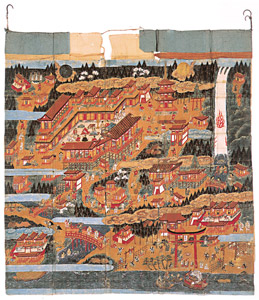
Prefecturally Designated Tangible Folk Cultural Property (designated 1990)
Made: Edo period(late 17th C. - 19th C.)
Shimogasaka, Oku
This collection of materials relates to the Kumano Bikuni, the itinerant nuns who worked to spread the Kumano faith during the Edo period. The Kumano Bikuni of Shimogasaka are said to have their origins in the Sengoku period (16th C.) with Matsunari, a daughter of a noble house, who came to Shimogasaka and began preaching the divine virtues of Kumano Gongen. These gods are part of Japanese syncretic Shinto-Buddhism and are enshrined in the Kumano Sanzan, three shrines located in Wakayama prefecture.
In Shimogasaka, one of the homes of the Kumano Bikuni, there are not only hanging scrolls used for religious instruction, but also a set of three picture scrolls which together depict the beginnings of the Kumano faith. Besides these, there also ritual objects like wooden printing blocks for paper amulet production and a shakujō (priest's staff), as well as historical records. It is rare for materials related to the Kumano Bikuni to have survived and been preserved, especially several in a single assemblage, making these materials highly valuable.