

本文
Votive tablets (ema) and a model of a Japanese ship, Wakamiya Hachimangū shrine
Votive tablets (ema) and a model of a Japanese ship, Wakamiya Hachimangū shrine
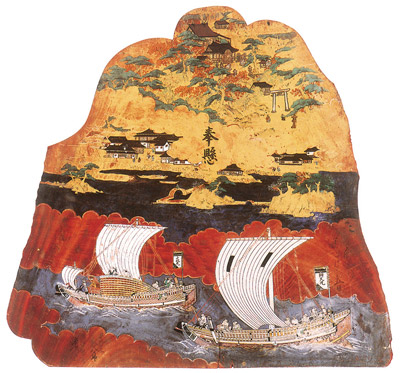
“Views of Old Shirimi”
Prefecturally Designated Important Tangible Folk Cultural Property (designated 2014)
Made: Edo period(late 17th c. – 19th c.)
Wakamiya Hachimangū shrine, Shirimi, Oku
The 24 votive tablets, as well as a model of a Japanese ship, kept at Wakamiya Hachimangū Shrine, date from between 1694 and 1846, and were mainly dedicated by the wealthy merchants who found great success in the shipping trade in the Shirimi area. There are works by famous painters such as Tashiro Tadakuni, a stand-out member of the Akita Ranga school, and Okamoto Toyohiko, a leading light of the Shijō school. The paintings cover a wide variety of themes. Of these, many have a rich regional character, such as “Views of Old Shirimi”, “The Saiei Maru" and “A Ship of the Joseon Embassies (chōsen tsūshinshi)”. This collection is not only recognized for its quality and quantity, but is also highly valued for what it can tell us about the prosperity of the Shirimi area during the Edo period.